
Big Mamma: a single network platform for 36 restaurants in 7 countries
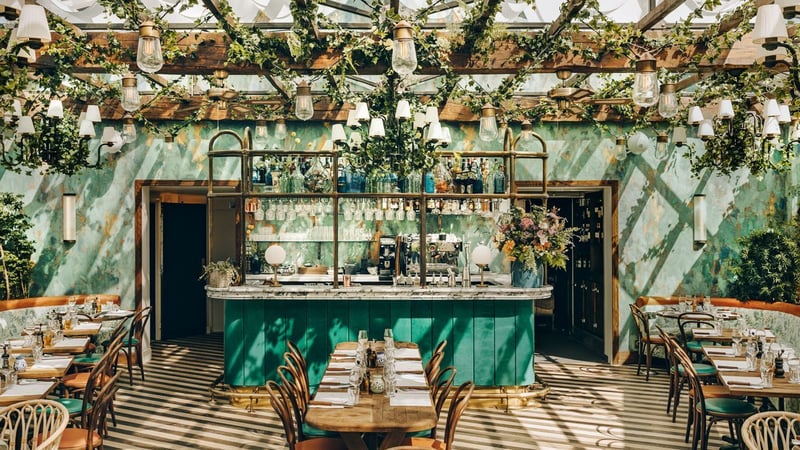
Wifirst deploys and runs the network baseline across Big Mamma's 36 restaurants and dark kitchens, spread over seven European countries. That means 513 monitored devices — access points, switches, cameras, UPS units — and 37 WAN links in a dual-link architecture, all managed from a single console. This is not just about guest comfort: in a restaurant where ordering, payment and food production all run over the network, when the network goes down, service stops.
Who is Big Mamma?
Big Mamma is an Italian restaurant group founded in France that has become, in little over a decade, one of Europe's most visible fast-growing hospitality brands. Its venues — Carmelo in Lyon, Circolo Popolare in Manchester, Gloria in Dublin, Pamela in Berlin, Edmondo in Hamburg, Giorgia in Munich, Barracuda in Brussels, Splendido in Marseille, Palatino in Bordeaux — combine high cover counts, heavy footfall and an uncompromising standard for flow on the floor.
The group runs two formats that behave very differently from a network standpoint: restaurants, with dining rooms, terraces, bars and open kitchens, and dark kitchens — production-only sites serving orders placed through delivery platforms. Two formats, two sizing models, one identical requirement for uptime.
THE CHALLENGE: how do you open in Berlin, Dublin or Madrid with the same reliable network as in Paris?
For years, hospitality treated the network as a nice-to-have — guest WiFi, a router and a local contractor were enough. That changed once restaurants became fully connected, with tills, card payment terminals, order-taking screens, kitchen display systems, ticket printers and live delivery orders all depending on the network.
For a group opening multiple venues each year across different countries, the challenge is not just technical. It is about delivering a repeatable operating model.
- Real-time criticality. Service happens in a two- to three-hour window. A network incident at 8:30pm on a Friday cannot be made up the following morning.
- Difficult RF environments. Converted heritage buildings, mezzanines, basements, glass roofs, outdoor terraces, thick load-bearing walls — every site is its own case.
- Multiple countries, multiple telecom realities. Lead times, local carriers, installation standards and points of contact all change from one market to the next.
- Two formats to size differently. A 300-cover restaurant and a production-only dark kitchen share neither usage density nor equipment mix.
- An inherited, heterogeneous estate. Sites already trading are cabled and equipped, sometimes by several successive contractors. Replacing everything at cutover is rarely realistic.
The challenge: build an architecture standard enough to be replicated country by country, and flexible enough to fit buildings that look nothing alike.
THE SOLUTION: one network blueprint, replicated site by site
"The same technical baseline in Paris, Berlin and Dublin — that is what makes an opening predictable."
Wifirst and Big Mamma defined a single technical baseline, identical whatever the country. Every site gets the same core architecture, then sized according to its floor area, layout and format. That standardisation is what turns an overseas opening into a repeatable project rather than a fresh one.
- Two Wibox gateways in a high-availability pair per site, alongside two Huawei switches — the active core of the network, identical across the estate.
- A dual-link WAN architecture on every site: a primary fibre connection (FTTH or FTTO, up to 1 Gbps symmetrical on the busiest venues) and a 4G/5G mobile failover link that switches over automatically. Depending on the site, the primary link is either operated by Wifirst or brought into the Wifirst network over VPN.
- A dedicated mobile link for monitoring on selected sites, kept separate from production traffic — so visibility survives an outage on the primary link.
- WiFi coverage sized by format: 9 to 14 access points on a restaurant with a dining room, mezzanine and terrace, against 2 on a production-only dark kitchen. Sizing is set from plans before opening, then adjusted after go-live — terraces in particular, ahead of the summer season.
- Existing hardware brought in rather than ripped out. On sites already trading, access points already in place are connected to Wifirst monitoring instead of being replaced. Ruckus and Cisco Meraki units therefore sit side by side in one console, avoiding a full hardware refresh at cutover.
- Peripheral equipment in the same view. Cameras, recording servers and UPS units report their status into Wifirst Center alongside access points and switches.
- Centralised multi-site monitoring, open to Big Mamma's teams and Wifirst's alike: a unified view of all 36 sites, status by site and by device, traffic, and connected devices.
Big Mamma's network by the numbers
The live portfolio now covers most of the group's European footprint, run as a single multi-country system:
- 36 restaurants and dark kitchens live, across seven countries — including France, Spain, the United Kingdom, Ireland, Belgium and Germany
- 513 devices monitored in total through Wifirst Center
- 305 WiFi access points and 103 switches in production
- 94 cameras and 7 recording servers reporting into the monitoring platform
- 37 WAN links monitored, in a dual-link fibre-plus-mobile architecture
- 35 Gbps of aggregate bandwidth across the estate
- More than 1,100 devices connected simultaneously at service peaks
A network that lives on service hours
The traffic curve of a restaurant portfolio looks like nothing else. Where a warehouse consumes linearly and a hotel follows a seasonal pattern, the Big Mamma network draws two sharp daily peaks — lunch and dinner — separated by deep troughs, seven days a week.
That signature has a direct operational consequence: the window in which the network has to be flawless is short and non-negotiable. Maintenance, upgrades and interventions are scheduled around service, never during it. It is also what justifies the dual-link design: inside a two-hour window there is no time to troubleshoot — there has to be a failover.
When the restaurant network becomes business-critical
Hospitality has digitised faster than most sectors. Tablet ordering at the table, order-taking screens, kitchen display systems, cashless payment, automated intake of delivery orders, connected stock management: the number of devices a single service depends on has multiplied in a handful of years.
That shift changes what the infrastructure is. A restaurant's network is no longer a utility sitting next to the business — it is part of it, in the same way an oven or a walk-in fridge is. An outage does not degrade the experience: it blocks ordering, payment and the pass to the kitchen at the same moment.
That is why the network architecture chosen with Big Mamma is built around resilience: redundant internet access, high-availability gateways, clear separation between business and guest traffic, and centralised monitoring of each site’s network equipment. The objective is not maximum bandwidth. It is uninterrupted service.
THE RESULTS
Big Mamma now runs a consistent network baseline across 36 sites and seven countries, monitored from a single console, with the same reference architecture in Paris, Berlin, Dublin and Barcelona. European openings draw on an established deployment model, which makes connectivity a predictable line in a venue's opening schedule rather than an open question.
Beyond WiFi and WAN, the scope has progressively widened to the equipment that keeps a connected restaurant running — switches, CCTV, protected power — pulled together into one operational view. That trajectory tracks the sector itself: the more a restaurant digitises, the more the network becomes the infrastructure everything else rests on.
For Wifirst, the partnership demonstrates the ability to run a multi-country portfolio for a fast-growing group, in a sector where the operating window is narrow and where uptime translates directly into service revenue.
Frequently asked questions
How many Big Mamma restaurants does Wifirst operate across Europe?
Wifirst runs the network across 36 Big Mamma restaurants and dark kitchens in seven European countries, covering 513 monitored devices from a single console: 305 WiFi access points, 103 switches, 94 cameras, 7 recording servers and 4 UPS units.
Why is the network business-critical in a restaurant?
A modern restaurant runs on connected devices from end to end: tills and card payment terminals, order-taking screens, kitchen display systems, ticket printers, and incoming orders from delivery platforms. A network outage during service does not make the experience less pleasant — it stops the restaurant.
How does Wifirst secure a restaurant's internet access?
Every Big Mamma site runs a dual-link WAN architecture: a primary fibre connection (FTTH or FTTO) and a 4G/5G mobile failover link that takes over automatically. Wibox gateways are deployed in high-availability pairs, and some sites also carry a dedicated mobile link for monitoring, kept separate from production traffic.
Does Wifirst replace existing equipment when it takes over a site?
Not as a rule. On sites that are already trading, Wifirst installs its own gateways and switches but brings the existing access points into its monitoring platform rather than ripping them out. The Big Mamma estate runs Ruckus and Cisco Meraki access points side by side in one console, which avoids a full hardware refresh at cutover.
