
The strategic guide to connectivity in logistics warehouses
How to transform connectivity (and WiFi in particular) into a real lever for productivity, traceability and competitiveness for warehouse operators.
- Introduction WiFi, the cornerstone of the connected warehouse
- Challenge no. 1 Covering a hostile radio environment
- Challenge no. 2 Taking on operational criticality 24/7
- Challenge no. 3 Coexisting radio protocols
- Challenge no. 4 Unifying connected services
- Challenge no. 5 Deploy without disrupting operations
- Challenge no. 6 Choosing the right operating model
- Challenge no. 6 Securing the network
- Conclusion WiFi, a lever for productivity and competitiveness
WiFi, the cornerstone of the connected warehouse
Logistics directors, operations managers, and CIOs face growing pressure to reduce costs and lead times while managing ever more complex operations: exploding numbers of SKUs, strict end-to-end traceability, and shippers who expect flawless, transparent flows.
To meet these demands, warehouses now depend on a wide range of technologies: WMS, RF terminals (PDAs, handhelds), voice picking, RFID, IoT sensors, AGVs and AMRs, video surveillance, and building energy management systems.
All of these tools rely on one critical foundation: a wireless network that is reliable, high-performing, secure, and always available.
WiFi has moved from “nice to have” to “core production infrastructure”, on the same level as docks, stacker cranes, or forklifts. A 15-minute outage in a preparation zone can cause tens of thousands of euros in delayed orders and contractual penalties.
To manage this risk, many logistics players have historically chosen to run their networks internally, in order to keep control, maintain in-house expertise, and ensure rapid response. This is a logical and prudent approach, but it reaches its limits when technical requirements (WiFi 6/7, cybersecurity, NIS2, AGVs, voice picking, industrial IoT) go beyond what an internal team can reasonably handle alone across multiple sites.
This is where a managed model brings real value: an operational, 24/7 supervised, SLA-backed service that can adapt to your organisation. It can be fully managed by a specialist provider, co-managed with your internal teams, or delivered as WiFi as a Service.
This guide outlines the main challenges and best practices for connectivity in logistics warehouses. The approaches presented are based on Wifirst’s expertise and feedback from over twenty years operating in demanding environments. Here are the 7 major challenges to address to transform your network infrastructure into a true operational and competitive asset.
Content provided by Wifirst, connectivity provider
![]() |
||
![]() |
||
Covering a structurally hostile radio environment
The Reality: The warehouse is a challenging environment for wireless networks
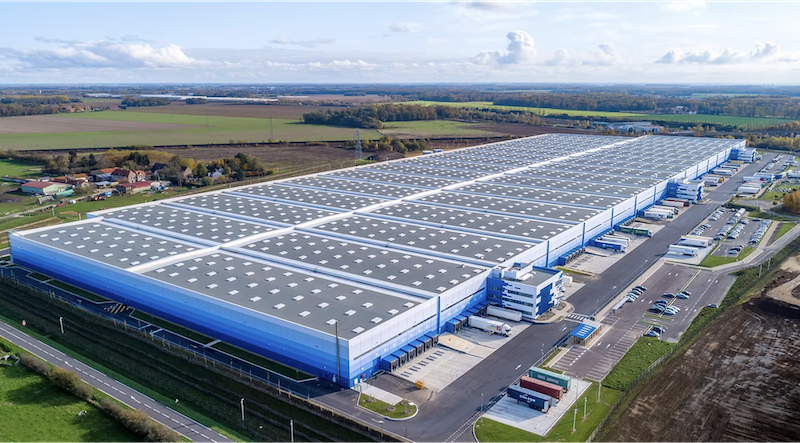
The logistics warehouse is one of the most complex environments in which to deploy a wireless network. Several factors contribute to this difficulty:
- High ceilings, often over 10 meters, which keep access points far from devices and weaken the signal at floor level.
- Dense metal racks, wrapped pallets, containers, and structural steel, all of which reflect waves and create shadows and echoes in the signal.
- A constantly changing environment as stock moves in and out – a full warehouse behaves very differently from an empty one.
- Very narrow aisles (VNA), overhead cranes, and forklifts moving continuously.
- Electromagnetic interference generated by variable-frequency drives and other industrial equipment.
- Harsh operating conditions: cold rooms down to -30°C, very high temperatures in non-air-conditioned zones, dust, and humidity.
Imperfect coverage or signal interruptions are more than just a nuisance: they slow down teams, degrade productivity rates, and can bring entire areas (preparation, shipping) to a standstill.
The Solution: A post-deployment radio audit and a network design tailored to your warehouse
Too many companies still design their warehouse WiFi only “on paper”. This is a critical mistake. A single unexpected metal cable tray, a pallet wall higher than planned, or a poorly positioned dock mirror can block the signal and create a dead zone.
At Wifirst, we only validate the installation of access points after a radio audit in real operating conditions – once partitions, fire doors, and racks are in place, and ideally with a storage level representative of the live site.
Three architectural principles to keep in mind:
-
Systematic 5 GHz coverage across the entire warehouse. RF terminals (handhelds, PDAs) naturally tend to fall back to 2.4 GHz, which is lower quality and more congested. Prioritising 5 GHz significantly improves stability and throughput.
- A cell size adapted to your usage profile. A multi-tenant, freight-sensitive 3PL needs a much higher density of access points than a large retailer with wide aisles. Within the Wifirst portfolio, we typically range from 150 to 400 m² per access point, depending on the warehouse type.
- A design that anticipates change. The architecture must perform in every occupancy scenario (empty, half-full, fully loaded) to ensure consistent service quality all year round.
24/7 criticality: a network sized like a production infrastructure
The Reality: WiFi has become a production infrastructure
The modern warehouse is entirely driven by the wireless network. At any given time, in any of its zones, critical operations depend on it:
| Operation | Description | Criticality level |
|---|---|---|
| Receiving | Pallet scanning at docks, control vs ASN, bin assignment | High - incoming flow |
| Putaway | Bin confirmation, validation by bin scan + SKU scan | High |
| Picking | Order picking: missions, SKU scan, quantity validation | Critical - heart of the flow |
| Packing / control | Weighing, quality control, labeling, packing slip generation | High |
| Shipping | Tour assignment, parcel scan, transport label | Critical - outbound flow |
| Inventory | Rotating or annual count, real-time stock update | Moderate (planned) |
In addition to these classic operations, there are a number of more demanding specialised systems:
- On-board terminals on forklift trucks: hardened screens mounted in the cab, guiding the operator without leaving his or her workstation, coupled with long-range scanners.
- Voice picking: voice-recognition headsets, very demanding in terms of WiFi latency (short, frequent interactions).
- Wearables: scanner rings, body computers, connected glasses, for hands-free picking.
- AGVs and AMRs: autonomous vehicles for which a split-second outage can trigger a safety shutdown - or even a cascade of fleet shutdowns.
As a result, a network failure does more than just cause discomfort. It degrades productivity, generates shipper disputes, and can bring entire zones to a standstill. According to a study often cited in the industry, a significant proportion of logistics companies estimate that they lose over a million dollars a year due to network breakdowns. Reliability is no longer a desirable feature - it's a contractual prerequisite.
The Solution: Performance, redundancy, and operator supervision
Keeping a warehouse critical 24/7 requires a combination of four levers:
- Low latency and seamless roaming. Beyond speed, it's regularity that counts. A forklift operator moving from one zone to another, an AGV moving between dense aisles, a voice picking headset in short interaction: they all require invisible switching between terminals. This is what we call geographical continuity - a discriminating point of attention in any comparative audit between service providers.
- End-to-end redundancy. From local network (LAN, WLAN) to Internet access (WAN), every link in the chain must be able to switch without interruption. Fiber links are secured by backup 4G/5G links. Critical network equipment is redundant. WiFi hotspots automatically reconfigure themselves if one goes down.
- Proactive 24/7 supervision by a NOC (Network Operations Center). Even an excellent in-house team cannot be on call 24/7/365 for the network perimeter alone. An operator NOC constantly monitors network health indicators - error rate, SNR degradation, channel saturation - and detects degradations before they become incidents. Dashboards remain accessible to site teams, who maintain operational visibility of their own infrastructure.
- Measurable contractual commitments. Availability rate (typically 99.5% or more), GTR (4-hour Recovery Time Guarantee), clear scope of responsibility. It is these commitments - enforceable, measured and audited - that distinguish a managed service from in-house operations based on your own resources. They contractually secure your high availability, irrespective of the operating model chosen (fully managed, co-managed or WiFi as a Service - see challenge no. 6).
Bringing WiFi, IoT and other protocols together
The Reality: A radio environment under growing pressure from multiple technologies
WiFi isn't the only thing running through the warehouse. As digitalisation progresses, complementary protocols are being deployed - each with its own frequencies, use cases and constraints:
| Technology | Frequency bands | Typical warehouse use |
|---|---|---|
| WiFi 6/7 | 2.4 GHz, 5 GHz and 6 GHz | RF terminals, voice picking, office automation, AGV/AMR |
| Bluetooth Low Energy (BLE) | 2.4 GHz | Wearables, asset tracking, indoor geolocation |
| Zigbee | 868 MHz and 2.4 GHz | IoT sensors, building management |
| UHF RFID | 860-960 MHz | Pallet/package labelling, inventory |
| 4G | 700 / 800 / 1800 / 2100 / 2600 MHz | Additional mobile connectivity |
| 5G | 700 / 800 / 1 800 / 2 100 / 2 600 / 3 500 MHz | Mobility, emerging private 5G |
The 2.4 GHz band is particularly saturated: legacy WiFi, BLE, Zigbee and many home automation devices share the spectrum. Poorly orchestrated, this cohabitation generates interference that silently degrades quality of service - without any outages being declared.
The Solution: Centralised management and coordination of all radio frequencies
For a multi-protocol environment to function sustainably, a single brain is needed to coordinate the frequency plan at site level. Three principles to look at:
- Give priority to 5 GHz and 6 GHz whenever possible for WiFi, freeing up 2.4 GHz for low-speed IoT protocols (BLE, Zigbee).
- Isolate the radio spectra of different technologies at the design stage, rather than letting them collide during operation.
- Choose a WiFi infrastructure compatible with IoT protocols (Aruba ESP, for example), which enables hardware to be shared: a single ceiling-mounted terminal can host WiFi, BLE and Zigbee, with significant savings in deployment and maintenance.
Unify connected services on a coherent infrastructure
The Reality: Wasteful legacy network
All too often, warehouses pile up networks: one line for WiFi operators, another for video surveillance, a third for telephony, a fourth for building management systems, and sometimes a fifth for the site's office information system. Each with its own contract, integrator, renewal cycle and incidents.
This "legacy" model multiplies subscription costs, maintenance and power consumption - and complicates every upgrade. Adding a new connected service (a temperature sensor in a cold room, an RFID reader on a quay, an IP camera in a sensitive area) becomes a mini-project in its own right.
What's more, the application environment is heterogeneous: WMS and ERP of different generations, multi-brand barcode scanners, business IoT sensors, connected locks and office automation. Unifying this ecosystem on a coherent network is complex, and requires a real architecture.
The Solution: A multi-service converged LAN
The winning strategy is the converged LAN: a single robust network that combines the entire building and carries all flows watertight and secure between them thanks to segmentation by VLAN.
Concrete benefits:
- Financial savings (OPEX): a single subscription, a single supervision, a clear chain of responsibility - whether 100% in-house, co-managed with an operator, or fully managed according to your organisation.
- Simple upgrading: adding a new connected service is like creating a new VLAN - not pulling in a new network.
- Tailored quality of service: QoS prioritisation ensures that critical flows (voice picking, RF terminals, AGVs) always come before non-real-time flows.
- Energy efficiency (RSE): shared hardware reduces the infrastructure's power consumption, and facilitates monitoring via building management systems.
.png?width=3062&height=1408&name=warehouse%20unified%20network%20(temp).png)
And for multi-warehouse sites - typically 3PL providers or B2B distributors with captive fleets (10 to 50 sites) - SD-WAN provides an additional layer: centralised multi-site supervision, link redundancy (fiber + 4G/5G backup), homogeneous security, standardised deployment from one site to the next.

Deploying without disrupting operations
The Reality: A warehouse doesn't stop
Many warehouses operate 24/7 or 2x8 / 3x8. There is no maintenance window that allows for off-line installation. Testing, cable pulling, terminal installation and configuration toggles have to be carried out while operations are running, without disturbing forklift drivers, pickers or dock flows.
The first challenge in the deployment phase is to guarantee continuity of service between the old (often aging) network and the new one, sometimes during several weeks of transition. The second is the physical constraints of a warehouse in operation: co-activity with forklifts, access at height, safety standards, prevention plans.
The Solution: Qualified teams and rigorous project organisation
Successful deployment on an occupied site rests on three pillars:
- Qualification of installation teams. Installing bollards at height using aerial work platforms (PEMP) requires CACES certification for technicians. Knowledge of the rules governing coactivity with forklift trucks, fire doors and ATEX zones (explosive atmospheres, sometimes in chemical or pharmaceutical zones) is non-negotiable.
- Detailed planning with site teams. Detailed schedule, validation of intervention windows, briefing of operational teams, shared prevention plan. Deployment is a project to be carried out with - and not against - operations.
- Industrialisation of multi-site deployment. For warehouse chains (federated 3PLs, captive B2B distributors), repeatable deployment at 10, 20 or 50 sites requires standardised processes, pre-configured equipment kits and proven intervention logistics. This is industrial know-how in its own right.
Choosing the right operating model: in-house, co-managed, fully managed
The Reality: A topic rarely addressed within most organisations
Warehouse network operation is one of the least arbitrated subjects when it comes to investment decisions. We choose equipment, coverage, sometimes an integrator - but the operating model (who supervises on a day-to-day basis, who intervenes in the event of an incident, who bears contractual responsibility for availability) is often decided by default, out of habit, or out of mistrust.
Traditionally, the logistics sector has long favoured internalisation. This is a defensible choice: it guarantees proximity, first-level responsiveness and control over business arbitrations. But it has its limits:
- internal IT teams at logistics sites are not equipped to handle 24/7/365 WiFi on-call,
- radio expertise (audit, frequency plan, roaming optimisation, WiFi 6E/7) requires R&D and technology watch that an in-house team cannot economically handle on its own,
- regulatory pressure (NIS2, ISO 27001) shifts cybersecurity requirements to an industrial level that is difficult to achieve in-house on a multi-site estate,
- in the event of a disruptive incident in the middle of a seasonal campaign, the logistics organisation bears the risk, with no measurable contractual commitment.
On the other hand, the opposite reflex - to outsource everything to a single operator - is understandably frightening. The warehouse network is a vital asset; entrusting it entirely to a third party with no knowledge of the site's day-to-day topology is not the best idea either.
The Solution: Consciously choose and combine
The right thing to do is to treat the operating model as a strategic decision in its own right, in the same way as the choice of WMS or PDA supplier. There are three main families of models, which can be combined:
| Model | What you keep | What the operator brings |
|---|---|---|
| Pure internalisation | 100% management and intervention | Ad hoc consulting, audit, training |
| Co-management | First-level on-site intervention, business arbitration, WMS articulation | Radio engineering, 24/7 NOC supervision, contractual responsibility for availability, R&D, compliance |
| Full managed / WaaS | Business requirement definition and strategic arbitration | Everything else: design, deployment, operation, N1/N2/N3 support, hardware renewal, security updates |
Co-management: a hybrid model that adapts to your organisation
Co-management has become the preferred model for many logistics players who want to retain control without giving up the expertise and commitment of an operator. It takes different forms depending on your organisation:
- Predominantly internal co-management: your IT teams manage day-to-day operations and intervene on site. The operator supervises in the background, provides steering tools, intervenes in complex engineering matters (radio audit, optimisation, major upgrades) and bears contractual responsibility for availability.
- Operator-dominated co-management: the operator manages operations and supervision, while your teams provide first-level on-site intervention (physical replacement, verification, coordination with operations). This is the model deployed by Sonelog (Sonepar) on six logistics platforms in France.
- Contractual co-management: a very precise division of responsibilities in the contract, with explicit sharing of SLAs, tools, access and escalations. Particularly suited to multi-site organisations where IT teams are centralised.
In all cases, there are two constants:
- high contractual availability (99.5% minimum, GTR 4 hours) is guaranteed by the operator - this is what distinguishes a managed partnership from a simple hardware supply service,
- total operational visibility for your teams: dashboards, real-time supervision, alerts, access to logs. Co-management is never a black box.
How do you decide?
Three criteria structure the choice:
- The size and maturity of your logistics IT team. A team of 8 network engineers dedicated to logistics does not have the same needs as a mid-market site with a multi-skilled IT manager.
- The number of sites and their geographical dispersion. A single site allows you to internalise everything, whereas a fleet of 10 to 50 multi-country sites automatically switches to co-management or full managed services.
- Contractual availability requirements. If your business cannot tolerate 4 hours of downtime without incurring penalties, you need an external service commitment - by design.
The common mistake is to think in all-or-nothing terms (in-house vs. total outsourcing). The right approach is to start with a co-managed pilot site, validate the distribution of roles in real-life conditions, then industrialise the model across the entire fleet.
Related content
Read our Sonelog Case StudySecuring the network and anticipating cybersecurity OT
The Reality: Logistics is a prime target for cyber attacks
The logistics sector has become a priority target for attackers. There are several reasons for this: operational criticality (and therefore high ransomware pressure capacity), fragmentation of legacy IS, multiplication of connected terminals and sensors, and external exposure via shippers and carriers.
Poorly secured WiFi is a major point of entry. RF terminals that remain in service for several years with old WPA stacks, free-access kiosks for visiting drivers, IoT sensors that have never been patched: these are all weak points. In an environment where production WiFi, business IoT, video surveillance and office information systems coexist, flow segmentation is no longer an option - it's the key to a site's resilience in the face of an attack.
Added to this is growing regulatory pressure: the NIS2 directive extends cybersecurity obligations to a wider range of companies, including supply chain and logistics players above a certain criticality threshold.
The Solution: Native security, segmentation, and compliance
Four basic principles structure a secure warehouse network:
- Native segmentation by VLAN and SSID: strict separation of business operator flows, guest flows (carriers, external technicians), IoT flows and administrative flows. A compromise on one does not contaminate the others.
- Strong authentication: WPA3 Enterprise rather than WPA2-PSK, NAC (Network Access Control) integration, certificates on RF terminals.
- Captive portal for visitors: carriers, maintenance providers, external contractors. Access traced, limited in time, isolated from internal IS.
- Compliance by design: choosing an ISO 27001-certified operator guarantees that the architecture (firewalls, flow segregation, encryption, log management) complies with a recognised, auditable standard. For sites subject to NIS2, this is a decisive basis for compliance.
WiFi, a lever for productivity and competitiveness
Warehouse connectivity is no longer an IT support issue. It's a production tool, just like a stacker crane or a loading dock. Its quality directly affects team productivity, flow reliability and the ability to honor contractual commitments to shippers.
By opting for a shared, supervised and scalable infrastructure, you can take action on five complementary levers:
- Operational productivity - RF terminals that don't fall over, voice picking without micro-disruptions, AGVs/AMRs that run as a fleet without interruption.
- Cost efficiency - a single network for WiFi, LAN, video surveillance, telephony and IoT, a clear chain of responsibility and unified supervision.
- Adapted operating model - in-house, co-managed or fully managed, depending on the maturity of your teams and the dispersion of your fleet, with in all cases high contractual availability guaranteed by your operator.
- Future-proofing - a technical foundation open to robotics, industrial IoT and private 5G, so you don't have to redo everything for the next technological leap.
- Resilience and compliance - contractual availability, end-to-end redundancy, OT/IT segmentation, NIS2 and ISO 27001 compliance.
Wifirst operates dozens of sites for 3PL providers, B2B distributors and manufacturers - complex, multi-tenant sites, sometimes 24/7, both fully managed and co-managed. This experience has given us a simple conviction: in a warehouse, network quality isn't visible until it's there - it's only visible when it's missing.
That's why it's so important to make it a strategic issue before the first signs of trouble appear.